

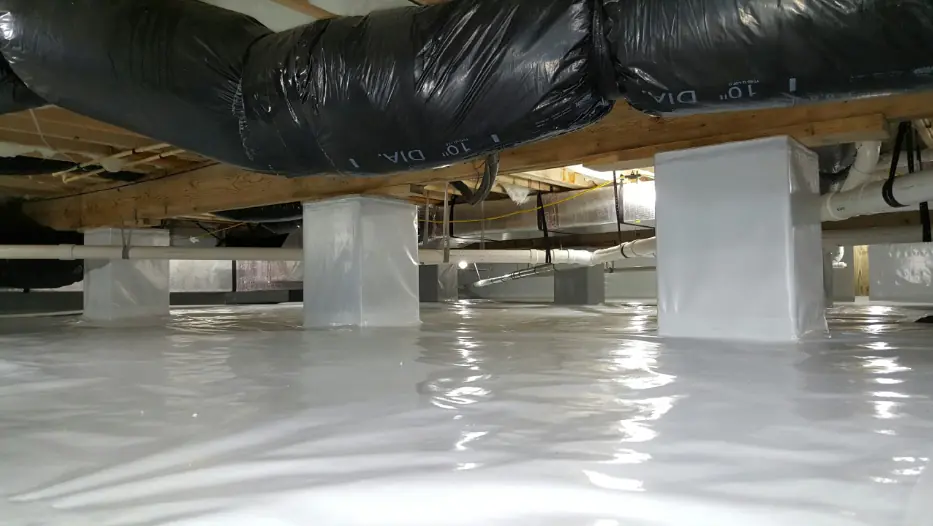
A crawl space vapor barrier is only as effective as the installation around it.
Contractors can start with a quality liner and still end up dealing with loose seams, poor attachment, trapped water, damaged material, or other issues if the crawl space is not prepared correctly or if different parts of the moisture-control system are treated separately.
For professional installers, those problems can also mean extra labor, callbacks, and time spent correcting work that could have been addressed during the original installation.
Before the next crawl space vapor barrier installation, watch for these seven common mistakes.
1. Installing the Vapor Barrier Before Addressing Water Problems
A vapor barrier is designed to control moisture vapor from the ground. It should not be treated as a substitute for solving an active drainage or water-intrusion problem.
If water is entering the crawl space, determine where it is coming from and how it will be managed before covering the ground.
That may require examining grading, foundation drainage, sump systems, drain matting, or other water-management components depending on the conditions of the project. YCS offers a range of crawl space drainage systems that can be incorporated into a broader moisture-management approach when appropriate.
Contractor takeaway: Build the water-management plan first. The vapor barrier should become part of that plan rather than hiding an unresolved drainage problem.
2. Skipping Crawl Space Preparation
Installing directly over an unprepared crawl space can make the rest of the job more difficult.
Before rolling out liner, inspect the area for debris, sharp objects, loose materials, and obstacles that could interfere with the installation or damage the barrier. Pay particular attention to the areas around foundation piers, walls, plumbing penetrations, equipment, and other transitions.
Contractors should also think through the layout before cutting material. Knowing where seams, wall transitions, piers, sump components, and other obstacles will fall can reduce unnecessary cuts and make the finished system easier to seal.
Preparation may not be the most visible part of an encapsulation project, but it often determines how smoothly everything that follows will go.
3. Choosing a Vapor Barrier Based on Thickness Alone
Mil thickness is useful information, but it should not be the only factor used to select a crawl space liner.
Ground conditions, intended application, reinforcement, installation traffic, surface conditions, puncture risk, flexibility, and the rest of the encapsulation system should all influence material selection.
YCS offers multiple crawl space vapor barriers and liners because crawl spaces and installation requirements vary. The appropriate ground liner for one project may not be the best choice for another.
Contractors should also consider how the liner will work with the tape, adhesive, wall materials, and other components being used.
Contractor takeaway: Choose the barrier for the conditions of the job and the complete system—not simply the largest mil number available.
4. Using the Wrong Tape or Adhesive for the Application
Not every seam, liner, or crawl space condition calls for the same attachment product.
This is an important distinction because YCS offers several crawl space adhesives and tapes for different installation situations, including Seam Tape, Pro+ Seam Tape, Magic Seam Tape, Seam Weld, Wall Attachment Tape, and Magic Sealant Adhesive.
Rather than treating tape as an interchangeable accessory, contractors should review the product guidance for the liner, surface, and job conditions they are working with.
Different materials and crawl space conditions may require different approaches to adhesion and sealing.
Contractor takeaway: Match the attachment method to the liner and application before the crew enters the crawl space.
5. Treating Seams and Transitions as an Afterthought
Most crawl spaces are not perfect rectangles with nothing in the way.
Piers, walls, corners, pipes, equipment, sump basins, entrances, and other transitions create the areas where careful planning matters most.
Before installation begins, determine how the liner will move through those areas and where seams will be located. Follow the liner and seaming-product instructions for surface preparation, overlap, attachment, and sealing rather than improvising once the material is already on the ground.
The goal should be a continuous moisture-control layer with deliberate transitions—not simply covering as much exposed soil as possible.
If there is uncertainty about a particular component or installation method, contractors can consult YCS installation guides before beginning the job.
6. Paying Attention to the Floor but Not the Walls and Piers
The ground liner may cover the largest visible area, but it is only one part of a full crawl space encapsulation.
Where the project calls for wall encapsulation, contractors also need to plan how the vapor barrier system will transition to foundation walls, piers, and other vertical surfaces.
YCS offers products such as Crawl Curtain, wall liners, Magic Sealant Adhesive, and YCS Wall Attachment Tape for these portions of an installation.
Installation details and required inspection clearances can vary by the project and applicable local requirements, so contractors should follow current installation documentation and relevant codes rather than relying on a single rule for every crawl space.
Contractor takeaway: Plan the walls, piers, and perimeter before laying the ground liner. They should be part of the installation design from the beginning.
7. Treating the Vapor Barrier as the Entire Moisture-Control System
Even a well-installed vapor barrier addresses only part of the crawl space environment.
Depending on the project, the complete system may also involve water management, drainage, vent sealing, air management, dehumidification, wall liners, access doors, and other components.
The correct combination depends on the conditions inside the crawl space and the goals of the installation.
A liner can be an essential part of the job, but long-term performance depends on how well all of the components work together.
Contractors who want additional technical information, product guidance, and training materials can also visit the YCS Pro Resources center.
A Final Crawl Space Vapor Barrier Installation Check
Before considering the installation finished, take time to inspect the entire system.
Check the liner for damage, review seams and transitions, inspect wall and pier attachment points, verify drainage components remain unobstructed, and confirm that each tape or adhesive has been used according to its product instructions.
It is also worth documenting the finished installation with photos. That gives the contractor a record of the completed work and creates an opportunity to catch a missed transition or detail before leaving the job.
A few extra minutes of final inspection is far easier than returning to correct an avoidable installation problem.
Build the System Around the Job
Professional crawl space encapsulation requires more than selecting a roll of liner.
The best results come from evaluating the conditions, addressing water problems first, selecting compatible materials, planning seams and transitions, and treating the vapor barrier as one part of the complete moisture-control system.
Your Crawlspace provides contractors with vapor barriers, liners, tapes, adhesives, drainage products, installation guidance, and training resources designed to help professionals build complete crawl space systems.
Need products for an upcoming installation? Explore YCS products and contractor resources, or find a YCS distributor serving your area.
FAQs
What is the biggest mistake when installing a crawl space vapor barrier?
One of the biggest mistakes is beginning the installation before understanding existing water and moisture conditions. Active water intrusion, drainage problems, debris, and other jobsite conditions should be identified before the liner is installed.
Is a thicker crawl space vapor barrier always better?
Not necessarily. Thickness is only one consideration. Contractors should also evaluate reinforcement, ground conditions, puncture risk, intended use, flexibility, installation traffic, and compatibility with the rest of the encapsulation system.
Can any tape be used on a crawl space vapor barrier?
Contractors should use a tape or seaming product that is compatible with the liner and installation conditions. Different products may be appropriate depending on liner thickness, surface conditions, moisture, and the type of connection being made.
Does a vapor barrier fix crawl space humidity by itself?
Not always. A vapor barrier helps control moisture vapor coming from the ground, but a complete crawl space moisture-control strategy may also involve drainage, sealing, ventilation or air management, and dehumidification depending on the project.
Where can contractors find YCS installation instructions?
YCS maintains installation guides, training videos, technical information, and other contractor support materials through its installation and Pro Resources sections.


